




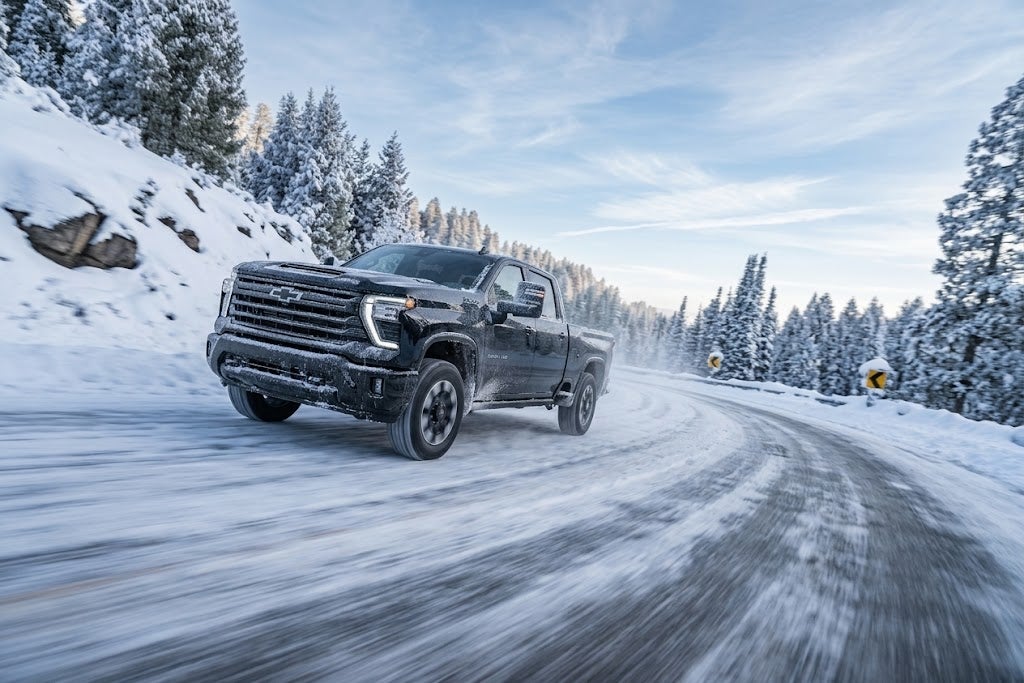
By the Arnie Bauer Chevrolet Service Team · Published October 16, 2026 · Updated October 16, 2026
Quick Answer: How Do You Prepare a Chevy Truck for a Midwest Winter?
Switch to winter tires when daytime temperatures stay below about 45°F, which in northern Illinois usually means late October to mid-November. Before the first snow, have your tires, battery, brakes, wipers, coolant and 4WD fluids checked. If you drive a Silverado EV, precondition the battery while plugged in and plan for some winter range loss. Booking service in fall keeps your truck dependable all winter.Your Winter Prep Timeline
| When | What to do |
|---|---|
| Mid-October | Book a tire swap and multi-point inspection; have the battery tested |
| Late October to mid-November | Install four winter tires once temperatures hold below 45°F |
| Before the first snow | Service 4WD fluids if due; replace wipers; fill washer fluid |
| All winter | Check tire pressure monthly; don’t let the fuel tank or EV battery run low |
| April | Switch back to all-season tires once temperatures hold above 45°F |
Why Midwest Winters Are Hard on Trucks
Wilmington and the greater Will County area deal with arctic cold snaps, freezing rain, black ice, road salt and sudden drops in temperature. Trucks carry heavier front ends and often ride lighter in the rear, which changes how they brake and handle on slick roads. Preparing early is the best way to avoid a breakdown, a slide-off or an expensive repair in January.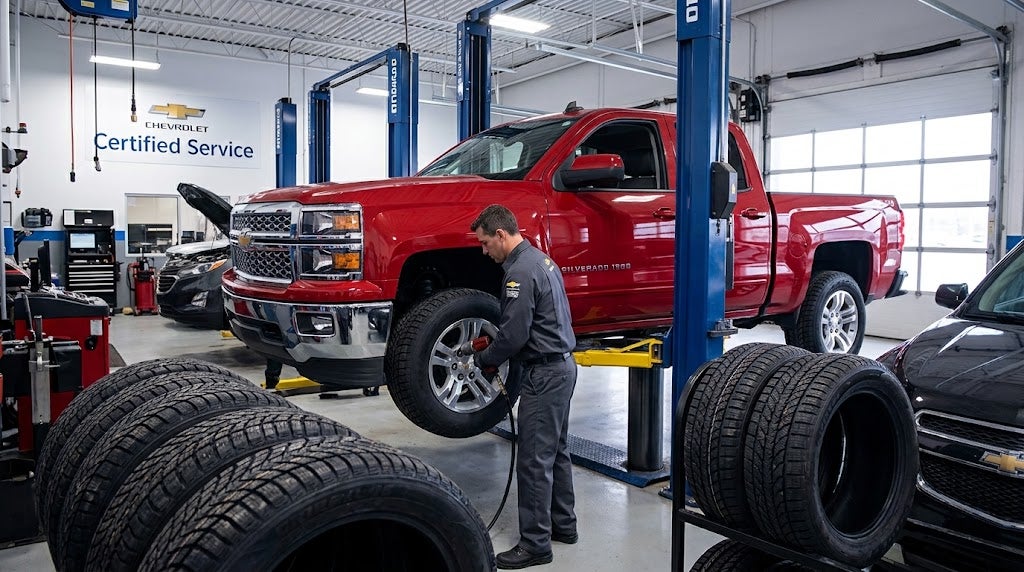
When Should You Switch to Winter Tires?
The 45°F rule. The rubber in all-season and summer tires stiffens as temperatures fall, which reduces grip. Winter tires use softer compounds that stay flexible in the cold, so tire experts generally recommend making the switch once temperatures stay below about 45°F (7°C), even before the first snowfall.Typical Illinois timeline:
- Mid-October: Schedule your appointment and compare tire options.
- Late October to mid-November: Install winter tires as overnight lows hover near freezing.
- April (or when temperatures stay above 45°F): Swap back to all-seasons, since winter tires wear faster in warm weather.
Check your tires either way:
- Tread depth: Tire Rack recommends replacing tires at about 5/32 inch of remaining tread if you expect snow-covered roads. The legal minimum in most states, including Illinois, is 2/32 inch. Measure with a quarter, not a penny.
- Tire pressure: Tire Rack notes that a tire filled to 32 PSI at 70°F drops to about 28 PSI at 30°F, roughly 1 PSI per 10°F. Check monthly and match the placard on your driver’s door jamb.
- Always install a full set of four. Mixing winter and all-season tires can cause unpredictable handling.

Does 4WD Mean You Don’t Need Winter Tires?
No. Four-wheel drive helps your truck accelerate in snow, but it does not help you stop or steer any better. Those depend on your tires. A 4WD truck on worn all-seasons can still slide through an intersection, so winter tires and a well-maintained 4WD system work best together.How to Service Your Chevy Truck’s 4WD System
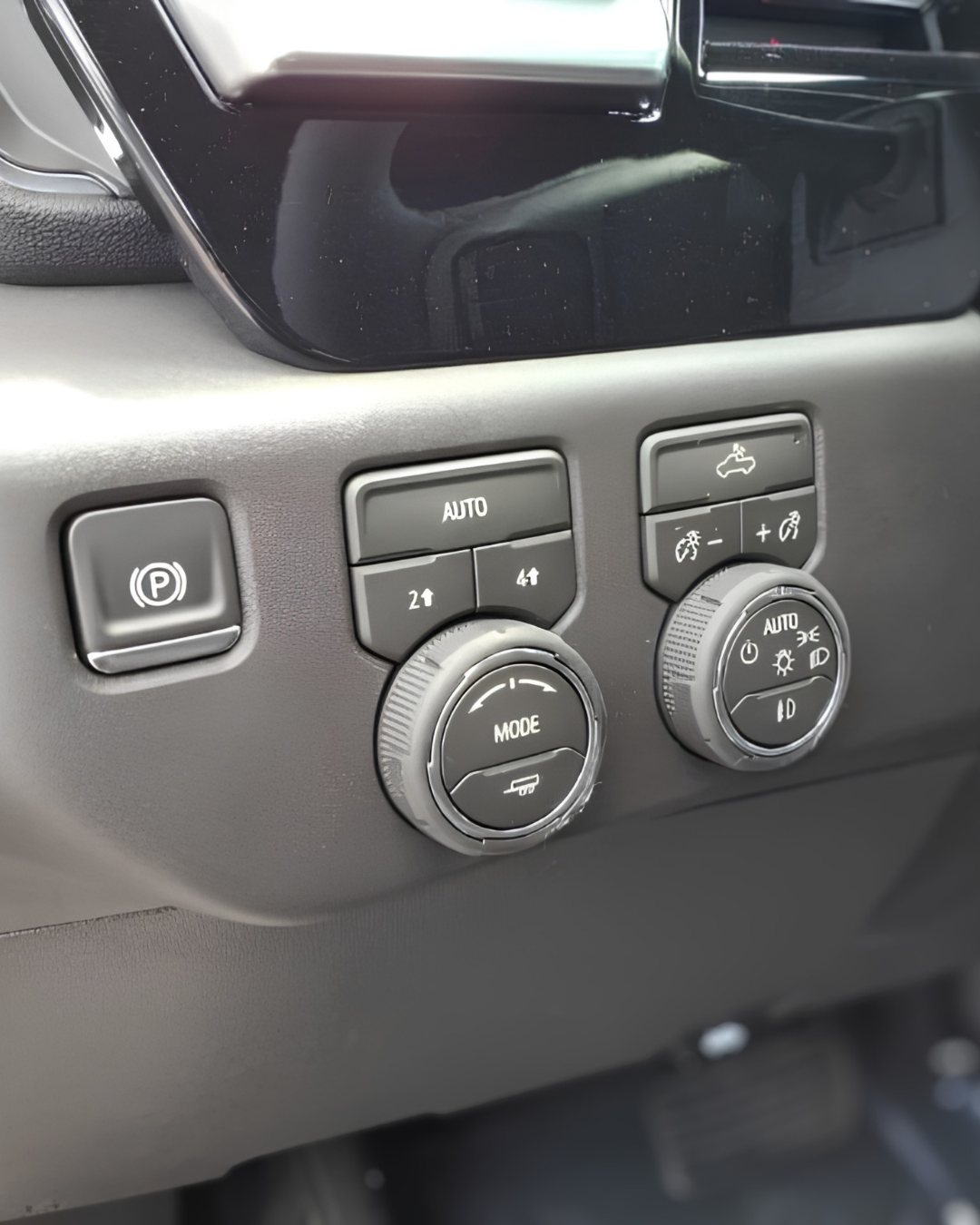
Many Chevy trucks, including the Silverado and Colorado, offer selectable 4WD modes such as 2WD, 4Auto, 4HI and 4LO, depending on model and trim. Because the system sits unused for much of the year, fall is the right time for a check. Ask your service team about:- Transfer case fluid: This fluid lubricates the components that send power to the front axle. Old or low fluid can cause shifting problems or damage.
- Front and rear differential fluid: Fluid breaks down over time, especially with towing, hauling or plowing.
- Driveline components: U-joints, CV axles, driveshafts and seals can wear or leak.
- 4WD shift function: Confirm the system engages smoothly and the dash indicators work.
- Recalls and updates: Check for open recalls tied to your VIN.
Tips for Using 4WD in Winter
- Use 4HI or 4Auto on snow, ice or slick roads. Avoid 4HI on dry pavement.
- Reserve 4LO for deep snow, steep grades or getting unstuck at low speeds.
- Engage 4WD before you lose traction, not after.
- Slow down and leave extra stopping distance. 4WD does not shorten it.
Driving a GMC Sierra?
The GMC Sierra 1500 is a close sibling of the Silverado 1500, so the winter tire, 4WD mode and fluid-service advice above generally applies. Check your owner’s manual for your trim’s details. Arnie Bauer GMC also serves drivers at the same Wilmington address, and you can browse Sierra inventory at arniebauergmc55.com.Winter-Proofing a Chevy Silverado EV
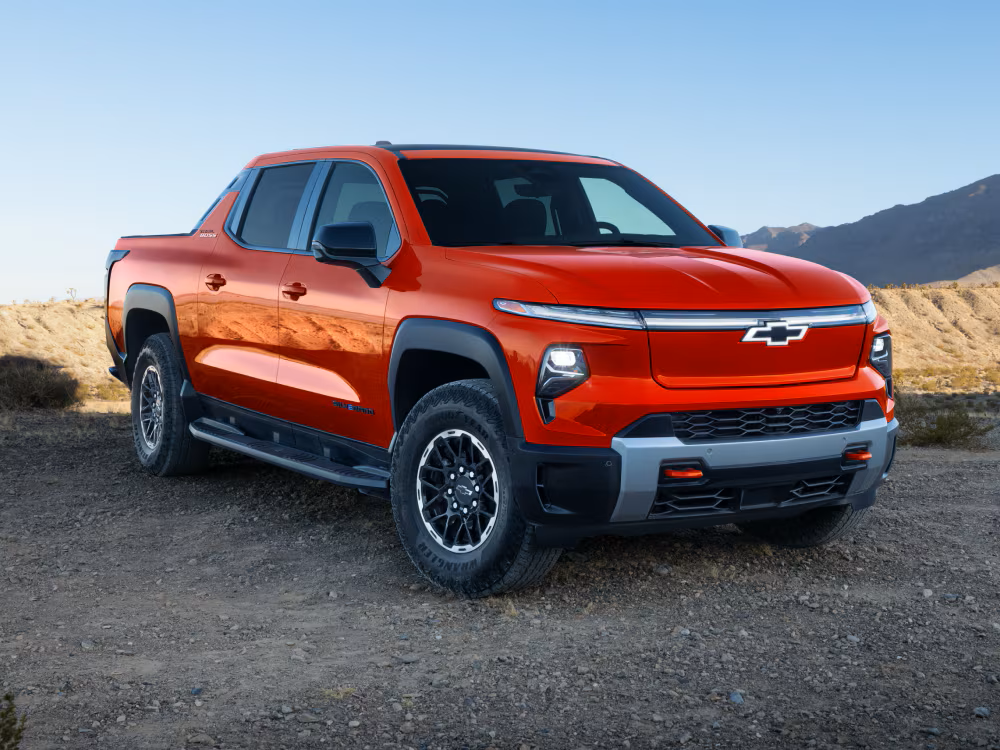
A Silverado EV handles Illinois winters well, but expect less range and slower charging when it’s cold. These habits help:- Expect some range loss. A University of Calgary summary of cold-weather testing says EV batteries can lose around 25% of their range below freezing. In a Canadian Automobile Association (CAA) test of 14 EVs in sub-zero temperatures, the Silverado EV lost the least range, about 14%.
- Precondition while plugged in. Warming the battery and cabin before you leave, ideally from a scheduled departure in the app, uses power from the grid instead of your driving range.
- Mind your tires. Check pressure monthly. Quality winter tires can also improve efficiency compared with cold-stiffened all-seasons, according to Autoblog.
- Plan charging stops. Cold batteries charge more slowly, so build in extra time on winter trips and charge before you get low.
- Drive smoothly. Moderate speeds, regenerative braking and Eco mode on snow-covered roads all help.
- Skip the transfer case, not the maintenance. Dual-motor AWD trims use electric drive units instead of a mechanical transfer case, so the fluid service above doesn’t apply. Tires, brakes, wipers and the 12-volt battery still need a fall check, and your owner’s manual lists the scheduled maintenance.
Your Winter Prep Checklist for Chevy Trucks
- Battery: Cold weather cuts battery output, so have it load-tested.
- Brakes: Inspect pads, rotors and brake fluid.
- Wipers and washer fluid: Install winter blades and fill with a de-icing washer fluid.
- Engine oil: Use the grade your owner’s manual recommends for cold starts.
- Coolant: Confirm proper antifreeze protection.
- Lights: Check headlights, taillights and fog lights.
- Undercarriage: Wash away salt and inspect for rust, a bigger issue on Illinois roads.
- Emergency kit: Include a blanket, flashlight, jumper cables, shovel, ice scraper, traction aid and phone charger.
Why Schedule Winter Prep at Arnie Bauer Chevrolet?
Arnie Bauer Chevrolet has served Illinois drivers for over 70 years as a family-owned dealership and part of the Arnie Bauer Auto Group. Our certified, GM-trained technicians use genuine GM OEM parts for tire service, battery testing, brake service, oil changes, cooling system service and multi-point inspections. Ask our service team about transfer case and differential fluid service for your truck.We’re at 901 E Baltimore St. in Wilmington, just off Route 66 and about 20 miles from Joliet, and we serve drivers in Plainfield, Morris, Braidwood, Coal City, Channahon, Kankakee and surrounding Will and Grundy County communities. Use our Tire Finder to start your search, and see our current service specials.
Ready to get started?
- Schedule service: Book online
- Shop tires: Arnie Bauer tire center
- Call us: 815-926-1206 (service) or 815-926-1460 (sales)
- Visit us: Arnie Bauer Chevrolet, 901 E Baltimore St., Wilmington, IL 60481. Service hours are Monday to Friday 7:00 AM to 5:00 PM and Saturday 8:00 AM to 1:00 PM.
Frequently Asked Questions
When should I put winter tires on my Chevy truck in Illinois?
Put them on when temperatures consistently fall below 45°F, typically late October to mid-November in northern Illinois. Don’t wait for the first snowfall.When should I take winter tires off?
Switch back to all-season tires in spring once temperatures stay above 45°F. Driving on winter tires in warm weather wears them out faster.Do I need winter tires if my truck has 4WD?
Yes, they are strongly recommended. 4WD improves traction when accelerating, but winter tires improve braking and cornering on snow and ice.How often should I service my truck’s 4WD system?
Follow the intervals in your owner’s manual and have the system inspected each fall. As one example, the 2025 Silverado HD manual reportedly calls for transfer case fluid replacement about every 50,000 miles, or every 25,000 miles under severe service.Can I use 4WD on dry pavement?
Generally no. Some modes, such as 4HI, can cause driveline binding and wear on dry roads. Auto modes are designed to manage this, so check your manual for your model.Do I need all four winter tires, or just two?
All four. Installing only two can upset the balance of your truck and reduce control.How much tread do I need for winter driving?
Tire Rack recommends replacing tires at about 5/32 inch of remaining tread if you expect snow-covered roads. The legal minimum in most states is 2/32 inch.How much range does a Silverado EV lose in winter?
Expect some loss. EV batteries can lose around 25% of their range below freezing, though the Silverado EV lost about 14% in a CAA cold-weather test. Preconditioning while plugged in helps.Does this advice apply to a GMC Sierra?
Generally yes. The Sierra 1500 is a close sibling of the Silverado 1500, but check your owner’s manual for your trim’s 4WD modes and service intervals.How much does winter tire installation and service cost?
Pricing depends on tire size, brand and your truck’s model. Contact Arnie Bauer Chevrolet’s service department for a quote.Don’t Wait for the First Snowstorm
A little preparation in fall can prevent big problems in January. Contact Arnie Bauer Chevrolet in Wilmington, IL to book your winter tire installation and winter prep service today.