





2026 Chevy Colorado MPG & Fuel Economy by Trim
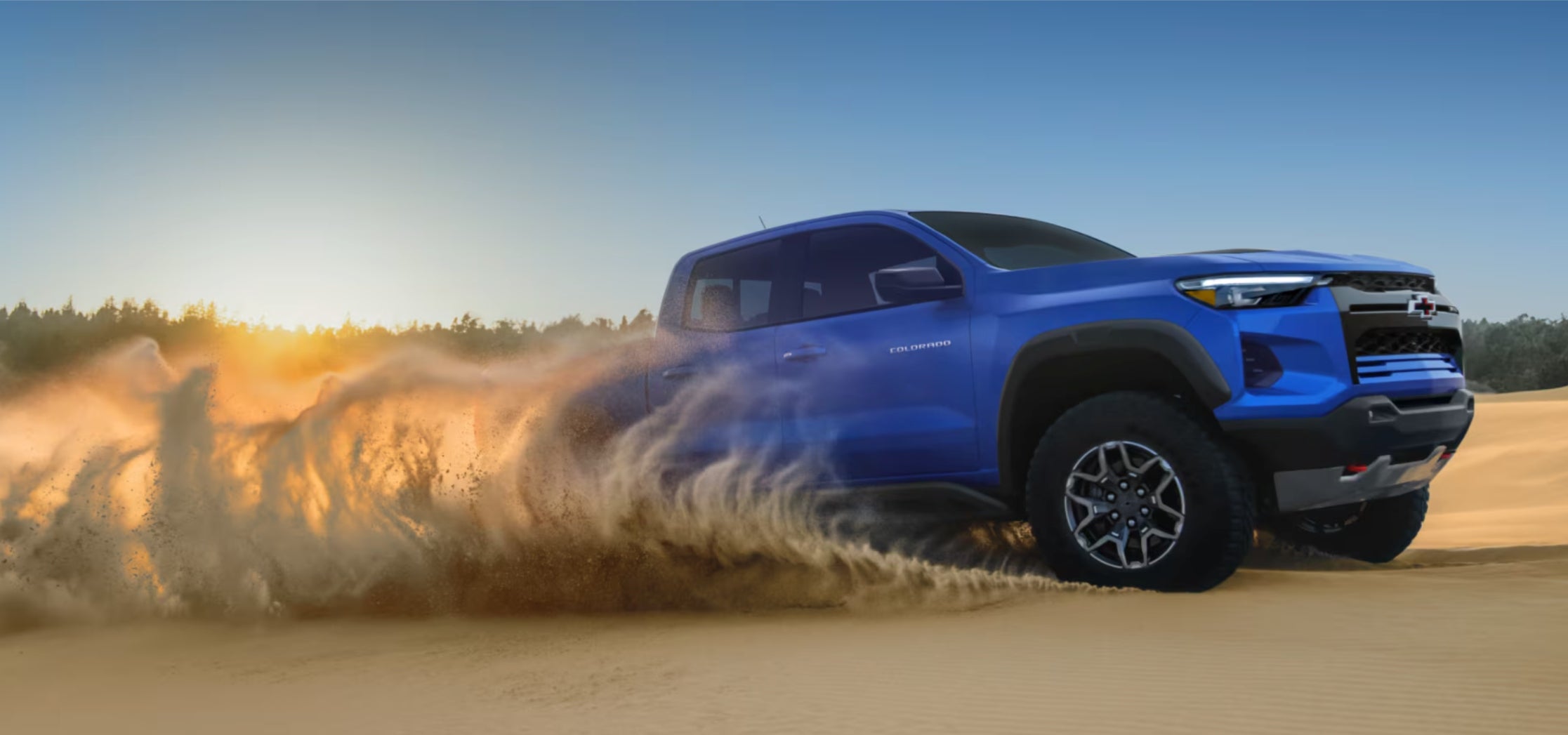
The 2026 Chevrolet Colorado earns EPA-estimated ratings of up to 19 MPG city / 24 MPG highway / 21 MPG combined in rear-wheel drive. Four-wheel-drive WT, LT, Trail Boss, and Z71 models are rated 17/22/19, the off-road ZR2 comes in at 17/17/17, and the ZR2 Bison at 16/16/16. Every trim shares the same 2.7L TurboMax engine — your drivetrain and tire choice, not the badge on the tailgate, is what moves the number.
Gas mileage is usually the first question midsize truck shoppers ask after towing, and the 2026 Chevrolet Colorado answers it in an unusually simple way: there's only one engine to choose from. The turbocharged 2.7L four-cylinder is standard on every trim — WT, LT, Trail Boss, Z71, ZR2, and ZR2 Bison — so the fuel economy spread across the lineup comes down to drivetrain, tires, and how much off-road hardware is bolted underneath. For 2026, Chevrolet nudged the ratings up slightly on street-oriented builds, with 2WD models gaining a highway MPG over last year.
Below you'll find the full EPA-estimated breakdown by trim and drivetrain, real-world driving range on a 21.4-gallon tank, and what actually moves the needle on a Colorado's real-world mileage. If you're weighing efficiency against capability, our 2026 Chevy Colorado towing capacity guide covers the other half of that equation.
2026 Chevy Colorado MPG & Fuel Economy by Trim
All 2026 Colorado trims use the turbocharged 2.7L four-cylinder (marketed as TurboMax), rated at up to 310 horsepower and 430 lb-ft of torque, mated to an 8-speed automatic transmission. Here's how EPA-estimated fuel economy breaks down:
| Trim | Drivetrain | City MPG | Highway MPG | Combined MPG |
|---|---|---|---|---|
| WT | 2WD | 19 | 24 | 21 |
| WT | 4WD | 17 | 22 | 19 |
| LT | 2WD | 19 | 24 | 21 |
| LT | 4WD | 17 | 22 | 19 |
| Trail Boss | 4WD | 17 | 22 | 19 |
| Z71 | 4WD | 17 | 22 | 19 |
| Trail Boss / Z71 with mud-terrain tires | 4WD | 17 | 20 | 18 |
| ZR2 | 4WD | 17 | 17 | 17 |
| ZR2 Bison | 4WD | 16 | 16 | 16 |
EPA-estimated figures for the 2026 model year. Choosing the available mud-terrain tire package on a Trail Boss or Z71 drops the highway rating from 22 to 20 MPG and combined from 19 to 18 MPG — a trade worth knowing about before you sign. Your actual mileage will vary with driving habits, load, terrain, weather, and vehicle condition. The window sticker on any truck in our Wilmington inventory lists that specific build's rating.
Fuel Tank Capacity & Estimated Driving Range
Every 2026 Colorado carries a 21.4-gallon fuel tank and runs on regular 87-octane unleaded — no premium required. Multiply that tank by each configuration's combined rating and you get a realistic picture of how far you'll go between fill-ups:
| Configuration | Combined MPG | Estimated Range |
|---|---|---|
| WT / LT (2WD) | 21 | ~449 miles |
| WT / LT / Trail Boss / Z71 (4WD) | 19 | ~407 miles |
| Trail Boss / Z71 with mud-terrain tires | 18 | ~385 miles |
| ZR2 | 17 | ~364 miles |
| ZR2 Bison | 16 | ~342 miles |
City MPG vs. Highway MPG: Why the Gap Matters
City MPG reflects stop-and-go driving with frequent idling and acceleration — think a morning run through Wilmington or Joliet traffic. Highway MPG measures steady-speed cruising, like a straight shot down I-55. Combined MPG blends the two on a roughly 55/45 city-to-highway split, which is why it's the most useful single number for most drivers. The Colorado's spread is telling: a 2WD LT swings five MPG between city and highway, while the ZR2 barely moves at 17/17/17 because its knobby tires and lifted stance create drag that never lets up. If your commute is mostly interstate, the 24-MPG highway rating on a 2WD truck will feel closer to your reality than the 21-MPG combined figure suggests. If you're crawling through town all day, plan around the city number instead.
How to Get the Best Fuel Economy from Your 2026 Colorado
EPA ratings are a lab benchmark, not a promise. Owners who consistently beat their sticker number tend to do a handful of unglamorous things well. A few that make a measurable difference in a turbocharged truck:
- Keep tires at spec pressure: Underinflated tires are the single most common mileage killer. Check the placard in the driver's door jamb monthly, not just when the warning light comes on.
- Skip the aggressive tire upgrade unless you need it: Mud-terrain rubber costs a Trail Boss or Z71 two highway MPG straight off the sticker, and aftermarket tires can cost more.
- Stay out of boost: The 2.7L TurboMax is efficient when it's loafing and thirsty when the turbo is spooled. Gentle throttle and steady speeds pay for themselves.
- Drop the tailgate load and roof accessories when you're not using them: Bed racks, light bars, and roof baskets add aerodynamic drag every mile you drive, empty or not.
- Stay on schedule with maintenance: Dirty air filters, worn spark plugs, and old oil all shave efficiency. A routine Chevy oil change service with the correct dexos-approved synthetic keeps the engine operating the way it was calibrated to.
Noticing your Colorado's mileage slipping below what it used to return? That's usually a maintenance signal rather than a fuel-quality one — schedule a service appointment and our certified technicians can check tire wear, filters, and engine data to find where the efficiency is going.
Which 2026 Colorado Trim Gets the Best Gas Mileage?
The 2WD Work Truck and 2WD LT tie for the most efficient 2026 Colorado at 19/24/21 MPG. Step up to four-wheel drive on any of the WT, LT, Trail Boss, or Z71 trims and you'll settle at 17/22/19 — a fair trade for Illinois winters and a modest one on paper. The off-road ZR2 and ZR2 Bison sit at the bottom of the range because their wider track, taller suspension, skid plates, and aggressive tires all work against efficiency by design; nobody buys a Bison for its MPG. Against the midsize field, the Colorado's 2WD 21-MPG combined rating lands right alongside the Nissan Frontier and Honda Ridgeline, a step behind the Ford Ranger's 23 MPG combined and the hybrid Toyota Tacoma. Where the Colorado earns it back is torque — 430 lb-ft is the most standard torque in the segment, so you're not paying an efficiency penalty for a weaker truck. For most Wilmington-area buyers who want a usable balance, a 4WD LT is the practical sweet spot: 19 MPG combined, all-season traction, and no capability compromise.
Test Drive the 2026 Colorado at Arnie Bauer Chevrolet
Our Wilmington, IL showroom stocks new 2026 Colorado trucks in both 2WD and 4WD, and we'll pull the window sticker for any truck on the lot so you can see its exact EPA rating before you commit. We also welcome shoppers from across the region, including drivers near Farmington, IL.
2026 Chevy Colorado MPG & Fuel Economy FAQ
What is the MPG of the 2026 Chevy Colorado?
The 2026 Chevy Colorado is EPA-rated at 19 MPG city / 24 MPG highway / 21 MPG combined with rear-wheel drive on WT and LT trims. Four-wheel-drive WT, LT, Trail Boss, and Z71 models are rated 17/22/19. The off-road ZR2 is rated 17/17/17 and the ZR2 Bison 16/16/16.
Which 2026 Colorado trim gets the best gas mileage?
The 2WD Work Truck and 2WD LT are the most fuel-efficient 2026 Colorado trims, both rated at 19 MPG city / 24 MPG highway / 21 MPG combined. Because every trim uses the same 2.7L TurboMax engine, drivetrain and tire choice — not trim level — determine the difference.
Does the 2026 Chevy Colorado require premium gas?
No. The 2.7L TurboMax engine is designed to run on regular unleaded gasoline with a minimum 87 octane rating, so there's no premium fuel requirement. Chevrolet does recommend using Top Tier–certified gasoline for its added detergents, particularly if you tow frequently or drive off-road.
How far can a 2026 Chevy Colorado go on a full tank?
With a 21.4-gallon fuel tank, a 2WD Colorado rated at 21 MPG combined can travel roughly 449 miles on a full tank. A 4WD model at 19 MPG combined covers about 407 miles, the ZR2 about 364 miles, and the ZR2 Bison about 342 miles. Real-world range varies with driving conditions and load.
Why does the Colorado ZR2 get worse MPG than the LT?
The ZR2's off-road hardware works against fuel economy: a wider track, lifted suspension, underbody skid plates, and aggressive off-road tires all add weight and aerodynamic drag. That drops it to 17 MPG across city, highway, and combined, compared to up to 24 MPG highway on a 2WD LT.
Where can I compare 2026 Chevy Colorado fuel economy in person near Wilmington, IL?
Arnie Bauer Chevrolet at 901 E Baltimore St. in Wilmington, IL stocks new 2026 Colorado trucks in multiple trims and drivetrain configurations. Our team can compare window-sticker MPG ratings side by side and set up a test drive so you can see how each one performs on your actual commute — contact us to check current availability.
EPA-estimated fuel economy figures reflect 2026 model year data and are subject to change by Chevrolet without notice. Your actual mileage will vary based on driving habits, load, terrain, weather, and vehicle maintenance. Always confirm the rating on your specific vehicle's window sticker.